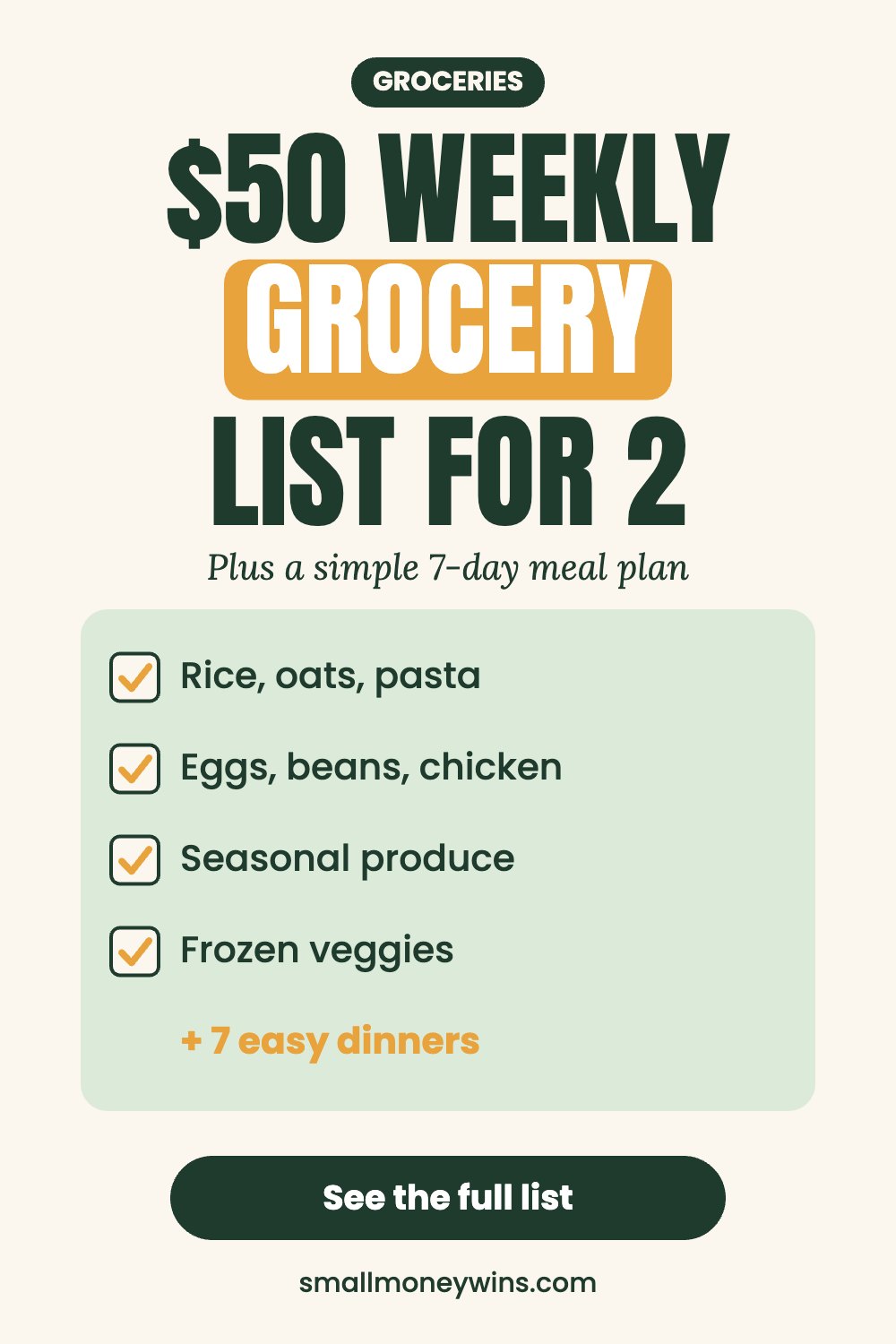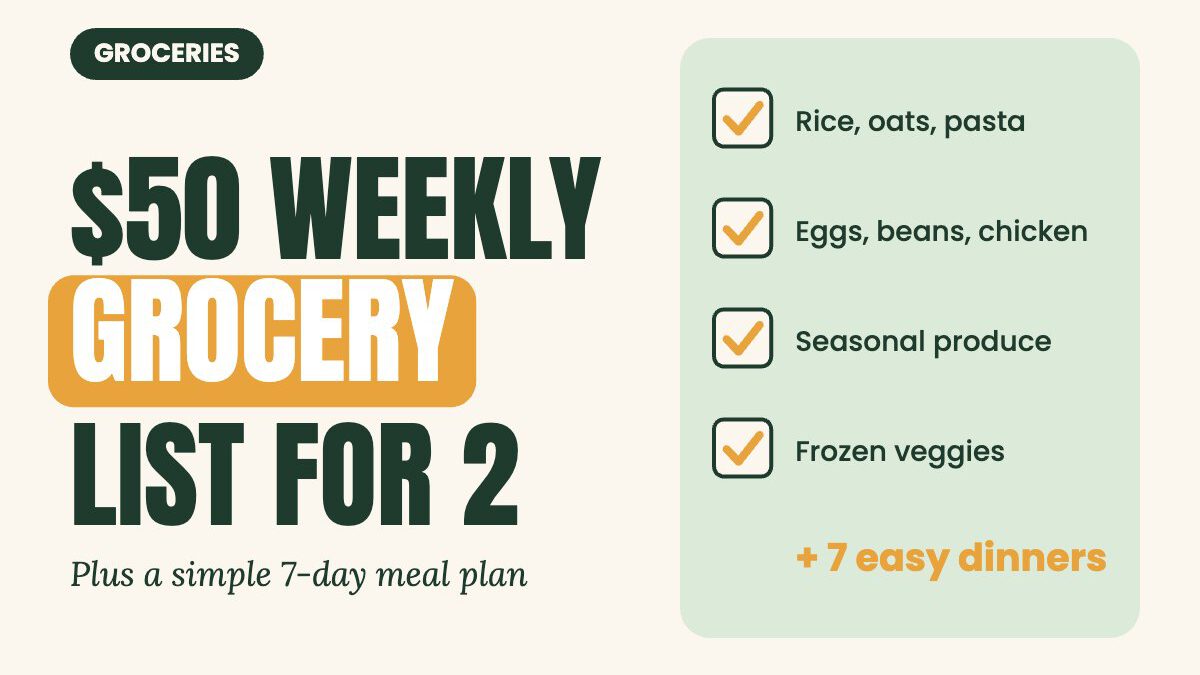
Quick answer: A $50 weekly grocery budget for two is tight but doable if you build meals around low-cost staples (rice, oats, pasta, beans, eggs, chicken thighs, frozen vegetables and seasonal produce), plan every meal before you shop, and use what’s already in your pantry. Below is a sample list and a 7-day meal plan that reuses the same ingredients.
Food is one of the few big expenses you can change this week. This guide shows one way two people can eat simply on about $50 a week. Prices vary a lot by store, region and season, so treat this as a template: check your store’s app or weekly ad and swap items for whatever is cheapest near you.
The rules that make $50 work
- Shop at a discount grocer if one is near you, and choose store brands.
- Plan every meal first, then write the list. No list, no trip.
- Reuse ingredients across several meals so nothing goes to waste.
- Start with your pantry. Most people already have oil, salt, pepper and a few spices. If you don’t, buy one or two at a time over several weeks.
- Make meat a side, not the star. Beans, eggs and lentils stretch meals for less.
Sample $50 grocery list for two
Grains and staples
- Long-grain rice (2 lb bag)
- Old-fashioned oats (large canister)
- Pasta (2 boxes)
- Sandwich bread (1 loaf)
- Flour or corn tortillas (1 pack)
Protein
- Eggs (1–1.5 dozen)
- Chicken thighs or drumsticks (family pack, about 3 lb)
- Dry or canned black beans (1 lb dry or 3 cans)
- Peanut butter (1 jar)
Produce
- Bananas (1 bunch)
- Apples or oranges (bag)
- Onions (small bag)
- Carrots (2 lb bag)
- Potatoes (5 lb bag)
- Cabbage (1 head)
Frozen and canned
- Frozen mixed vegetables (large bag)
- Frozen broccoli (1 bag)
- Canned diced tomatoes (2 cans)
- Pasta sauce (1 jar)
Dairy
- Milk (half gallon)
- Shredded cheese (1 bag)
Tip: Add up the list in your store’s app before you go. If it’s over $50, swap chicken for more beans and eggs, or skip the fruit bag and buy what’s on sale.
Simple 7-day meal plan
Breakfasts: oatmeal with banana or apple, peanut butter toast, or scrambled eggs, rotating through the week.
Lunches: leftovers from the previous dinner, or egg sandwiches and carrot sticks.
| Day | Dinner |
|---|---|
| Mon | Roasted chicken thighs with potatoes and carrots |
| Tue | Chicken fried rice with frozen veggies and egg (uses leftover chicken) |
| Wed | Black bean and rice burrito bowls with cheese |
| Thu | Pasta with tomato sauce and broccoli |
| Fri | Bean and cheese quesadillas with cabbage slaw |
| Sat | Chicken, cabbage and potato soup with toast |
| Sun | Breakfast for dinner: eggs, fried potatoes and toast |
How to stretch it further
- Cook rice and beans in big batches on Sunday to save time and energy.
- Save bones and veggie scraps for homemade broth.
- Use a cashback or loyalty app your store offers for digital coupons.
- Check markdown sections for meat, bread and produce close to its sell-by date and use or freeze it the same day.
- Grow herbs on a windowsill if you use them often.
Is $50 a week realistic?
For some people, yes. For others, especially in high-cost areas or with dietary needs, it isn’t, and that’s okay. The method still works at any budget: plan meals, reuse ingredients, buy staples, and cut waste. If $50 is too tight, try $70 and work down over time.
FAQ
What are the cheapest healthy foods?
Dry beans, lentils, oats, rice, eggs, cabbage, carrots, potatoes, bananas and frozen vegetables are usually among the lowest-cost nutritious options.
Should I buy in bulk on a $50 budget?
Only for items you’re sure you’ll use before they spoil, like rice, oats and dry beans. Bulk deals aren’t savings if food gets thrown out.
Prices change often and vary by store and region. This article is for general educational purposes only.
Save this for later
Pin this guide so you can find it again when you need it.