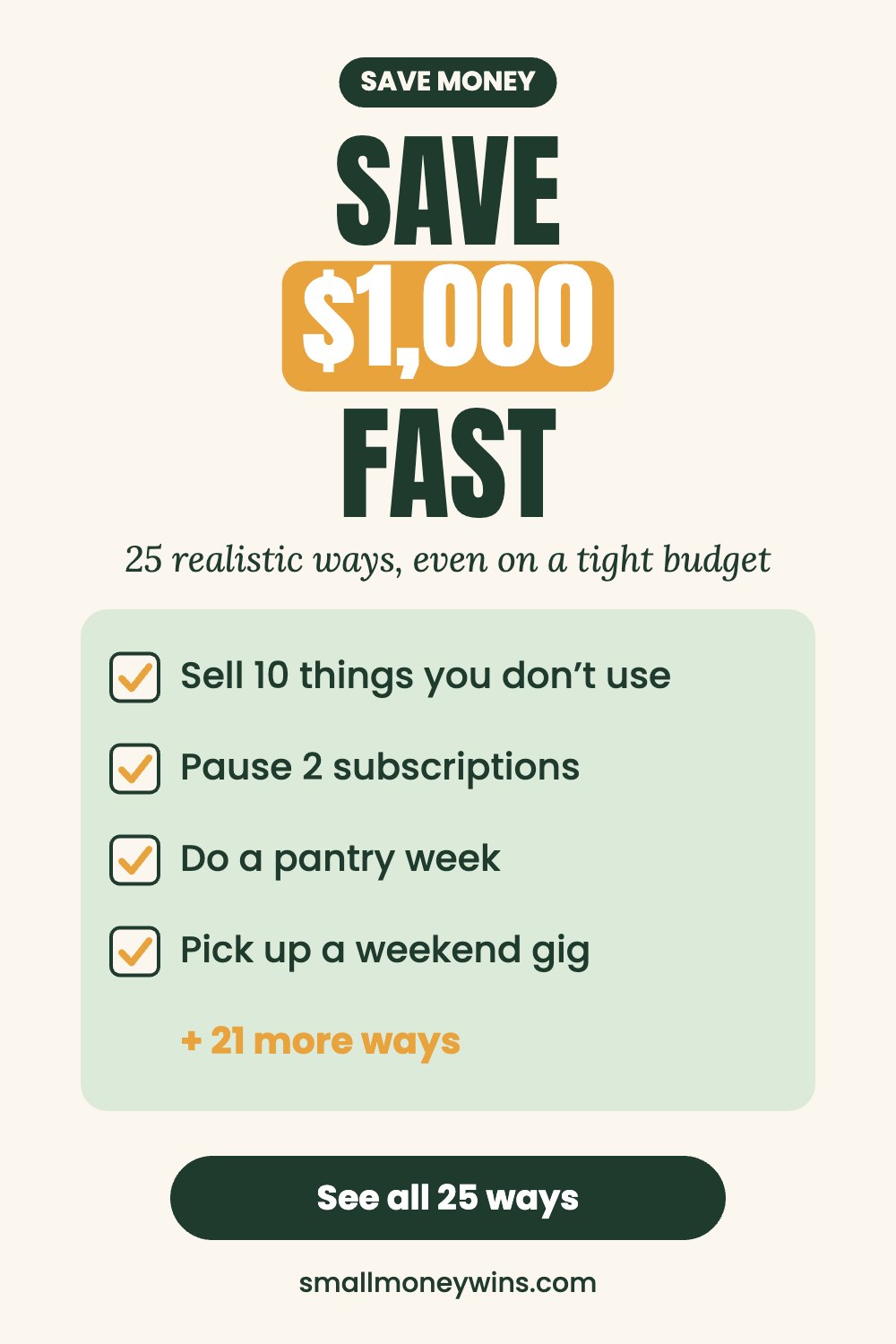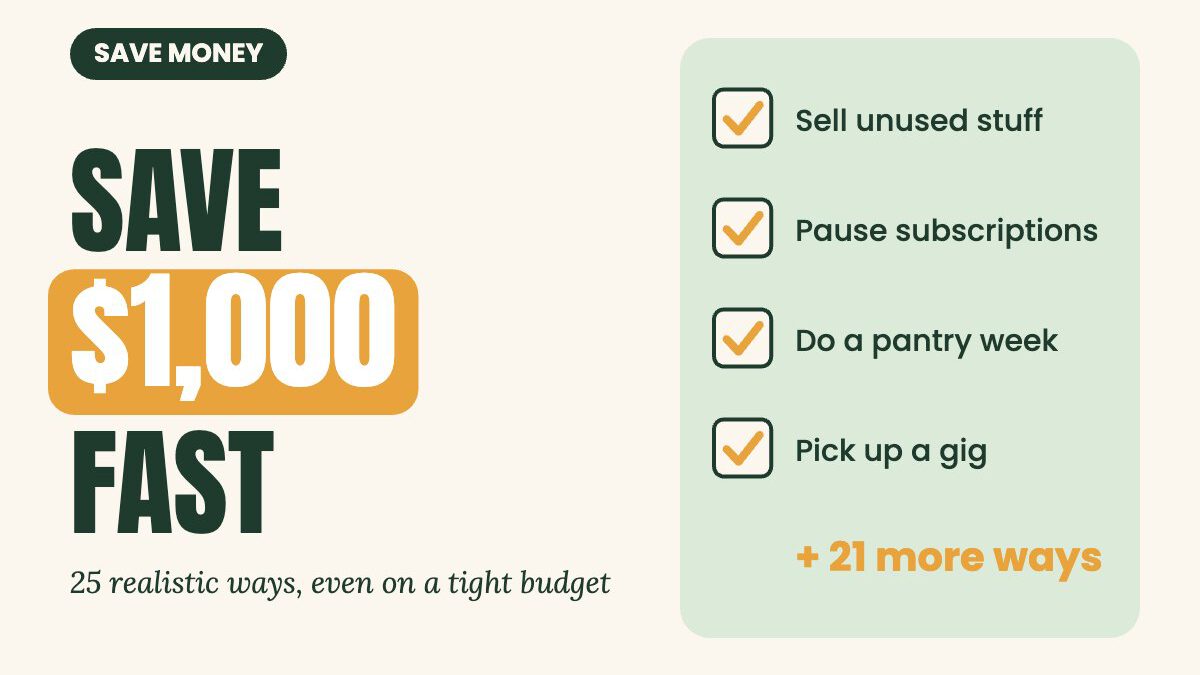
Quick answer: Saving $1,000 fast usually takes two moves at once: cutting a few expenses hard for a short time and bringing in a bit of extra cash. Pick 4–6 ideas from the list below that fit your life, give each one a dollar target, and move the money into a separate savings account the same day it shows up.
A thousand dollars is a turning point. It covers most surprise car repairs, a vet visit, or a month where a paycheck runs late. It’s also small enough that you can reach it in a few weeks or months, even on a tight budget, if you attack it from more than one direction.
This guide gives you 25 realistic ways to get there. Not every idea will fit you, and that’s fine. You only need a handful that do.
Before you start: set up the plan
- Pick a deadline. “By the end of March” is easier to act on than “soon.” Divide $1,000 by the number of weeks you have to get a weekly target.
- Open a separate savings spot. A savings account at a different bank, or a sub-account without a debit card, keeps the money from quietly leaking back into daily spending.
- Track every win. Write each amount down as you move it. A simple tracker keeps you going when progress feels slow.
Example: If your deadline is 10 weeks away, you need about $100 a week. That might be $40 from cutting spending, $35 from selling things, and $25 from a small side gig.
Cut spending for a short sprint (ideas 1–10)
1. Do a pantry, fridge and freezer week
Before buying groceries, plan a week of meals around what you already have. Buy only true gaps like milk or fresh produce, then move the difference between your usual grocery bill and what you spent into savings.
2. Pause subscriptions you won’t miss
List every recurring charge from your bank statement: streaming, apps, boxes, memberships. Pause or cancel the ones you haven’t used in the last two weeks. You can restart later.
3. Try a no-spend challenge
Choose a stretch (a weekend, a week or a month) where you only pay for essentials like rent, bills, groceries and gas. Decide in advance what counts as essential so there’s no debate in the moment.
4. Plan meals and cook in batches
Pick 4–5 simple dinners, cook double portions, and use leftovers for lunch instead of buying it.
5. Switch to store brands
Many store-brand basics like flour, rice, canned goods, cleaning supplies and over-the-counter medicine are very similar to name brands. Compare the unit price on the shelf tag to see the real difference.
6. Call and ask for a lower bill
Phone, internet and insurance companies sometimes offer a cheaper plan or promotional rate if you ask, especially if you mention you’re comparing options. Have a competitor’s price ready.
7. Use the 48-hour rule
When you want something that isn’t a need, wait 48 hours before buying. Many urges fade on their own. Removing saved cards from shopping sites adds helpful friction.
8. Use cash for flexible categories
Take out a fixed amount each week for groceries, eating out or fun money. When the cash is gone, that category is done until next week.
9. Plan free fun
Libraries, parks, free museum days, community events, and game or movie nights at home can replace paid outings for a few weeks.
10. Lower energy use at home
Unplug devices you’re not using, wash clothes in cold water, and adjust the thermostat a few degrees. Small savings add up over the length of your challenge.
Bring in extra cash (ideas 11–20)
11. Sell 10 things you don’t use
Look for unused electronics, furniture, baby gear, tools, sports equipment, brand-name clothing and games. Local marketplace apps and community groups work well for bulky items.
12. Pick up extra shifts or overtime
If your job offers extra hours, even a few a week can cover a big part of your goal. Ask your manager what’s available during your challenge.
13. Try a weekend gig
Food delivery, grocery shopping services or rideshare can fit around a regular job. Factor in gas, wear on your car and taxes when you look at what you really earn.
14. Offer pet sitting or dog walking
Start with neighbors and friends, or use apps that connect pet owners with sitters.
15. Babysit or help with errands
Parents often need a trusted sitter for date nights or after school. Older neighbors may pay for help with yard work, groceries or small chores.
16. Sell a skill online
Writing, design, editing, tutoring, bookkeeping or virtual assistant work can be offered on freelance platforms. Start with one small, clearly priced service.
17. Rent out something you own
A parking spot, storage space, tools or camping gear can earn money while you’re not using them. Check your lease, HOA rules and insurance first.
18. Return purchases you don’t need
Check recent orders and receipts. Anything unused and still inside the return window can go back, and the refund goes straight to savings.
19. Claim money you’re owed
Search your state’s official unclaimed property website, check old gift card balances, and redeem credit card rewards as a statement credit or cash.
20. Hold a yard sale
If you have lots of small items, one weekend sale can clear them at once. Team up with neighbors to draw more buyers.
Make saving automatic (ideas 21–25)
21. Save windfalls right away
Tax refunds, cash gifts, bonuses or rebates can go straight to your goal before you have time to spend them.
22. Set up an automatic transfer on payday
Schedule a transfer to savings for the day your paycheck lands. Even $25 a paycheck adds up without relying on willpower.
23. Use a round-up feature
Some banks and apps round each purchase up to the next dollar and move the change to savings. It’s slow alone, but it helps in the background.
24. Do a money-saving challenge
Structured challenges, like saving a set amount each week or filling in a savings chart, make progress visible and a little more fun.
25. Save “found” money
Each time you skip a planned purchase, use a coupon, or spend under budget, move that exact amount into savings.
Sample 30-day plan
Here’s one way the ideas could combine for someone aiming for $1,000 in a month. Your numbers will be different, so treat this as a template, not a promise:
- Pantry week and meal planning: less spent on groceries
- Paused subscriptions and no-spend weekends: a steady weekly saving
- Selling unused items: varies widely, often the biggest single chunk
- A side gig or extra shifts: depends on your hours and area
- Any refund, return or windfall: saved the same day
Tip: If a month is too tight, stretch the goal to 8–12 weeks. A slower plan you finish beats a fast plan you quit after a week.
Common mistakes to avoid
- Keeping savings in checking. It’s too easy to spend by accident.
- Cutting everything at once. Extreme cuts often end in a spending rebound.
- Ignoring high-interest debt. A common approach is building a small emergency fund first, then focusing on debt.
- Forgetting side-gig costs. Gas, fees and taxes come out of what you earn.
FAQ
How fast can I realistically save $1,000?
It depends on your income, bills and how many ideas you combine. Some people do it in a month with a side gig and selling items; others take three to six months by cutting spending alone. Both count.
Where should I keep my $1,000?
Many people use a separate savings account, often a high-yield one, so the money is easy to reach in a real emergency but not tied to a debit card.
What if I can’t save much right now?
Start with what you can, even $5 or $10 a week. The habit matters more than the amount at first.
This article is for general educational purposes and is not personalized financial advice.
Save this for later
Pin this guide so you can find it again when you need it.