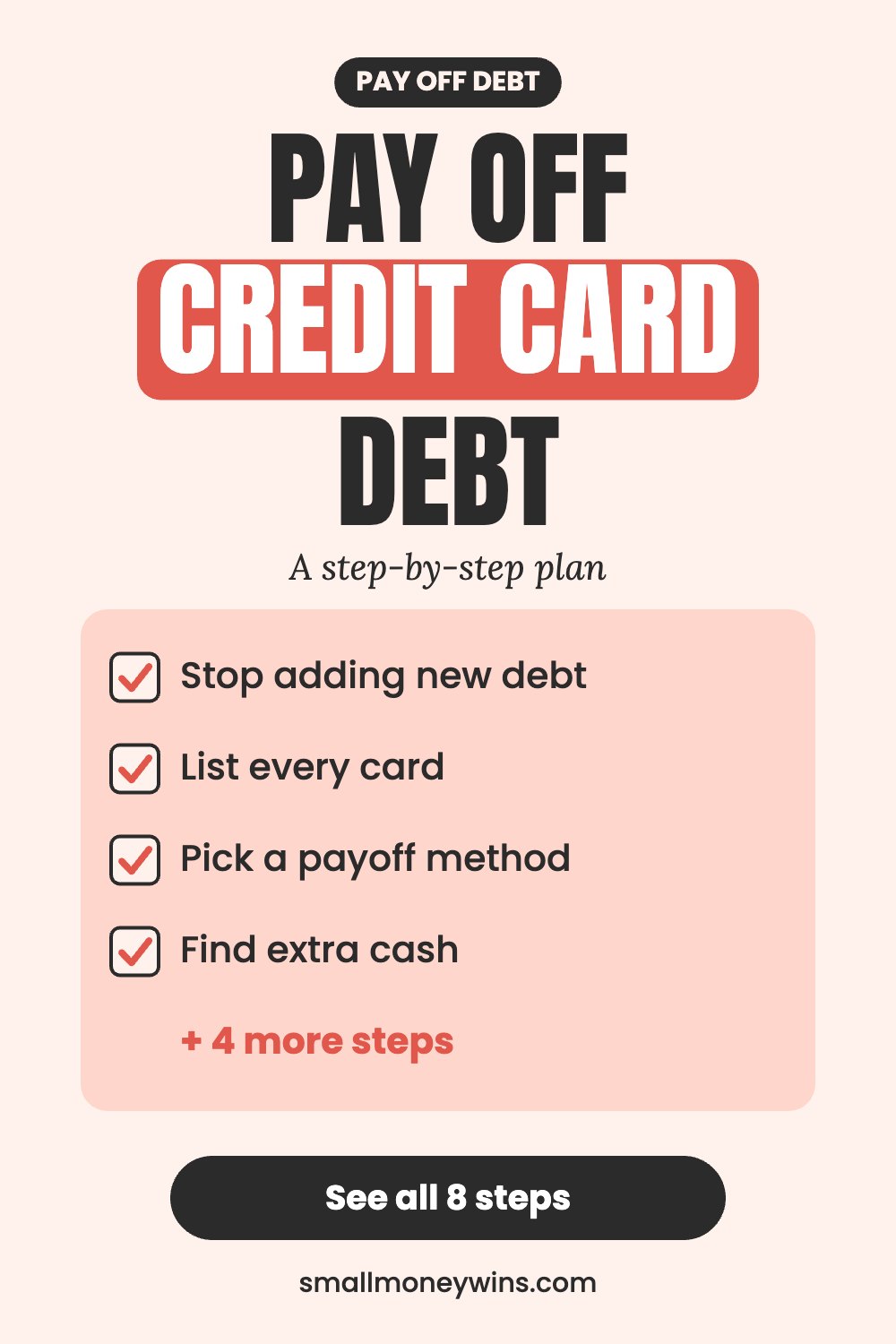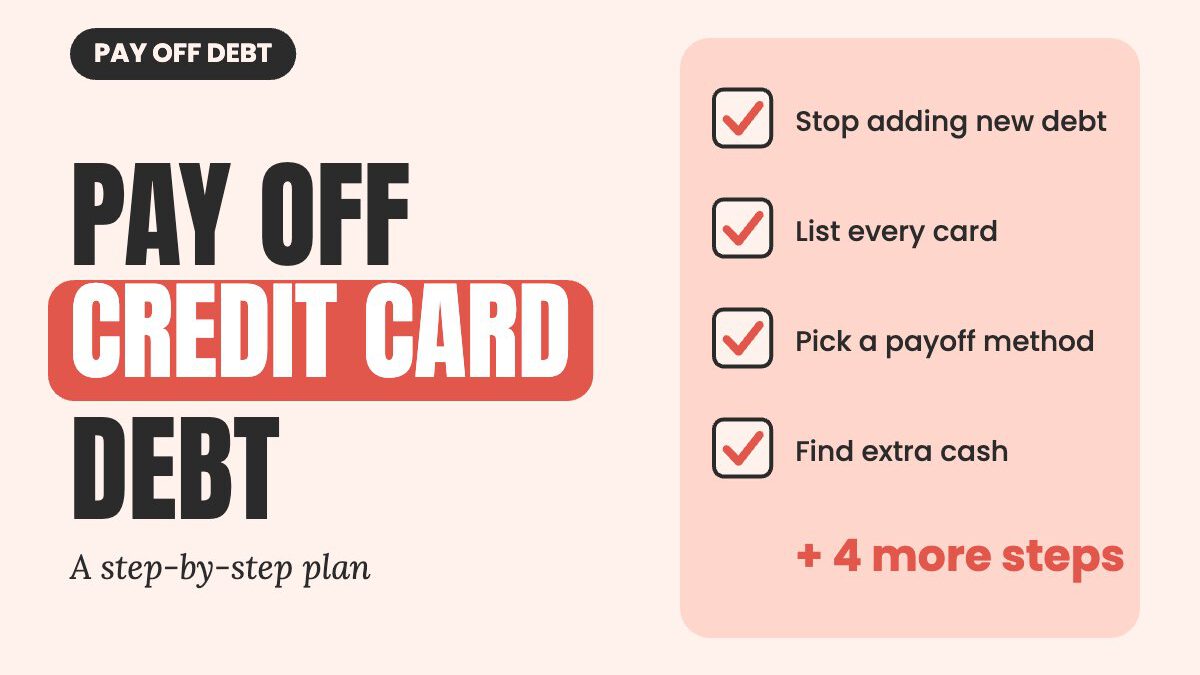
Quick answer: To pay off credit card debt: stop using the cards, list every balance and interest rate, pay the minimum on all of them, choose one card to attack with every extra dollar (snowball or avalanche), look for ways to lower your interest rate, and find extra money in your budget. Repeat until every card is at $0.
Credit card debt can feel like running on a treadmill. You pay every month, but high interest keeps the balance from moving. The good news: with a clear plan, it does go down, and each card you pay off makes the next one easier.
Step 1: Stop adding to the balance
You can’t empty a bathtub while the tap is running. Take the cards out of your wallet, remove them from shopping sites and switch everyday spending to a debit card or cash. If something is truly urgent, plan for it in your budget first.
Step 2: List every card
Write down each card’s balance, interest rate (APR), minimum payment and due date. Seeing the full picture in one place is often the hardest step, and the most important.
Step 3: Build a tiny emergency cushion
Even a few hundred dollars set aside can stop the next flat tire from going back on a card. Many people aim for a small starter fund before attacking debt aggressively.
Step 4: Choose a payoff method
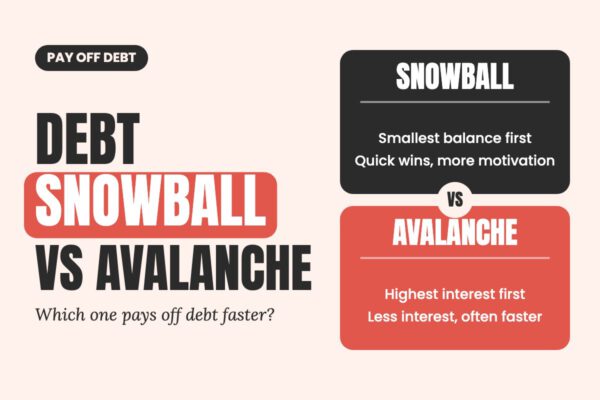
- Debt avalanche: put extra money toward the highest-APR card first. This usually saves the most interest.
- Debt snowball: put extra money toward the smallest balance first. This gives faster wins and motivation.
Either way, pay at least the minimum on every card, and when one is paid off, roll its full payment to the next. Not sure which to choose? Read our guide: Debt Snowball vs. Avalanche.
Step 5: Try to lower your interest rate
- Call your card issuer and ask for a lower APR. It doesn’t always work, but it costs nothing to ask, especially if you’ve paid on time.
- Consider a balance transfer card with a 0% intro APR if you qualify. Check the transfer fee (often a percentage of the balance) and make a plan to pay it off before the promo ends.
- Look at a debt consolidation loan only if the rate is truly lower and you won’t run the cards back up.
- Talk to a nonprofit credit counselor about a debt management plan if payments feel unmanageable.
Step 6: Find extra money to throw at it
Every extra dollar shortens your timeline. A few places to look:
- Cancel unused subscriptions
- Meal plan and cut takeout
- Sell things you don’t use
- Pick up a side hustle or extra shifts
- Put tax refunds, bonuses and gifts straight toward the debt
Step 7: Automate and pay more often
Set up autopay for at least the minimum so you never pay late. Some people also make a payment every time they get paid instead of once a month, which can reduce the balance interest is calculated on.
Step 8: Track progress and celebrate
Use a debt payoff tracker and color it in as balances drop. Celebrate each paid-off card in a small, low-cost way. Then move on to the next one.
Tip: After a card is paid off, you don’t have to close it. Keeping older accounts open can help your credit history, as long as you’re not tempted to use them.
Common mistakes to avoid
- Paying only the minimum, which keeps you in debt much longer
- Moving debt to a 0% card and then spending on the old card again
- Skipping a budget, so extra money never shows up
- Giving up after a setback. Progress isn’t always a straight line.
FAQ
Should I save or pay off credit card debt first?
Many people build a small emergency fund first, then focus on paying off high-interest debt, then build a larger emergency fund. It helps keep new emergencies from turning into new debt.
Will paying off credit cards help my credit score?
Lower balances usually reduce your credit utilization, which is one factor in many credit scoring models.
What if I can’t afford my minimum payments?
Contact your card issuers right away to ask about hardship options, and consider speaking with a nonprofit credit counselor.
This article is for general educational purposes and is not personalized financial advice.
Save this for later
Pin this guide so you can find it again when you need it.