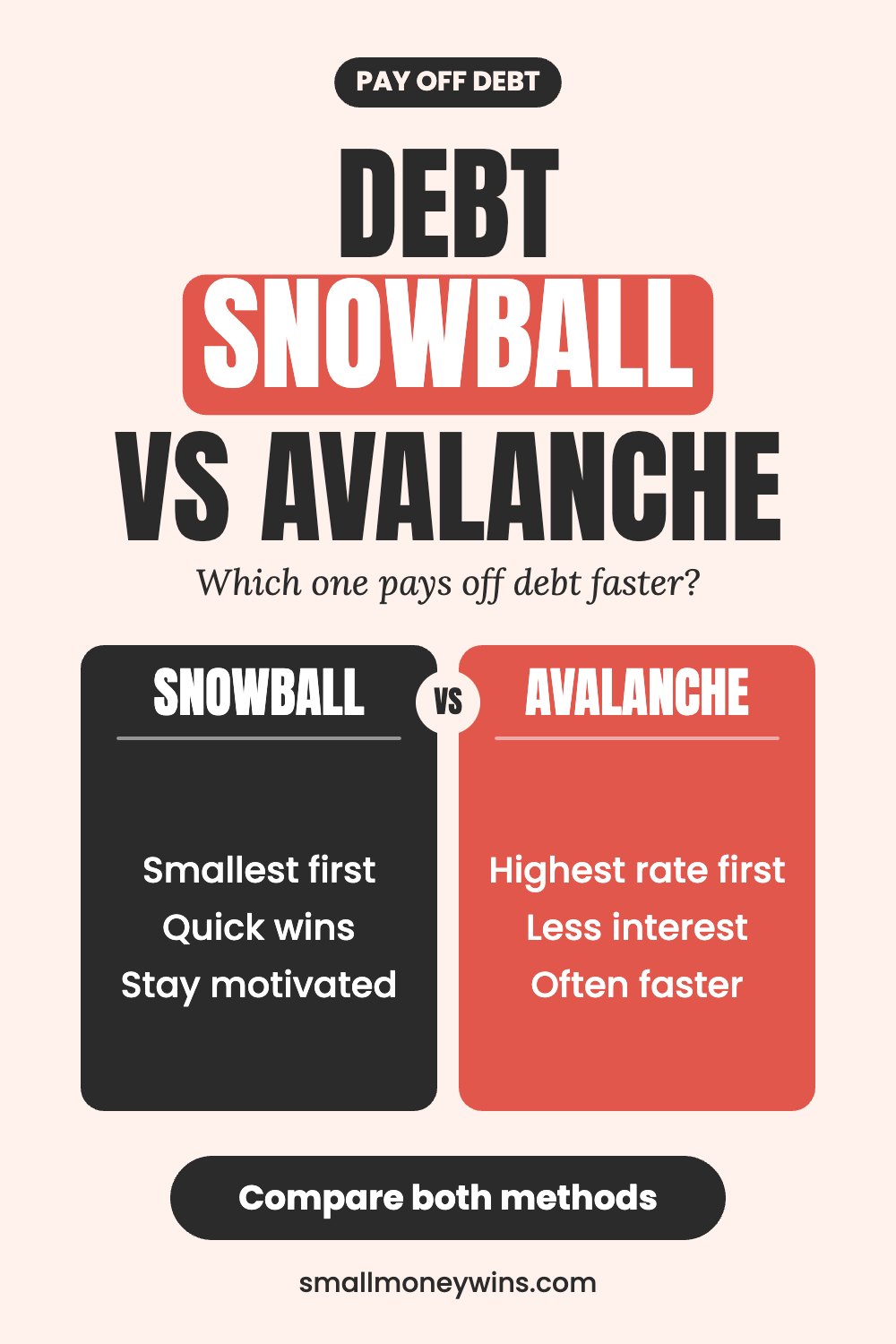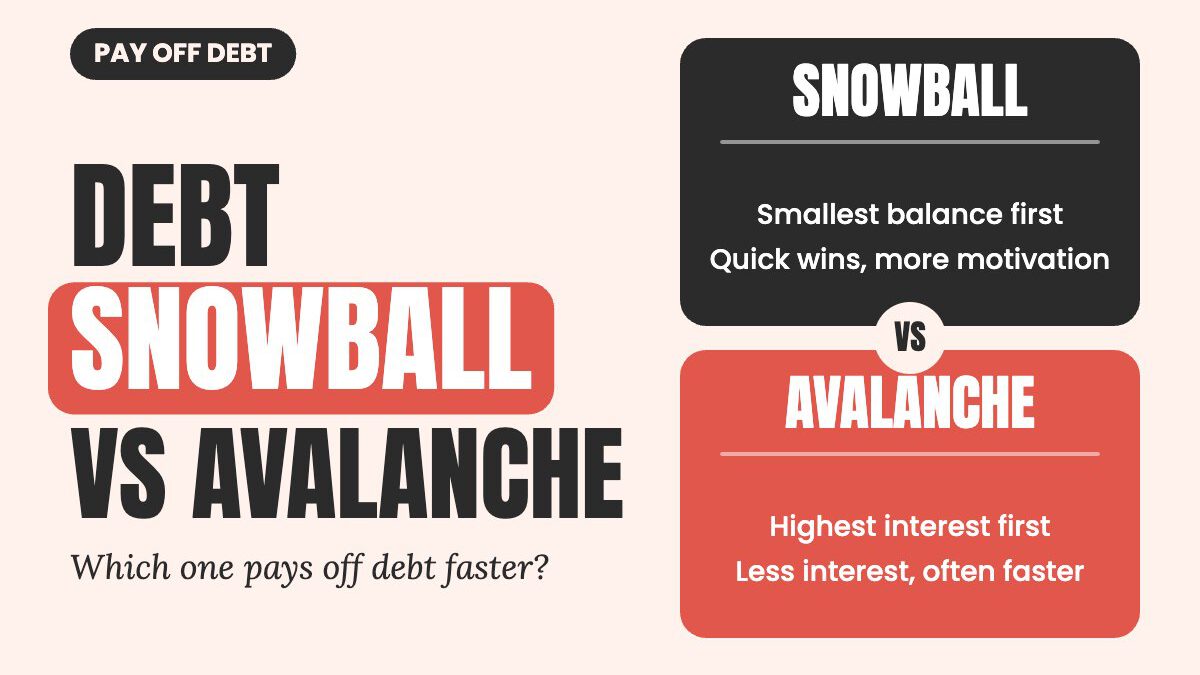
Quick answer: The debt avalanche (paying the highest interest rate first) usually costs less in interest and is often faster on paper. The debt snowball (paying the smallest balance first) gives quicker wins, which helps many people stay motivated. The best method is the one you’ll stick with until every debt is gone.
If you have more than one debt, the order you pay them off matters. The two most popular strategies are the debt snowball and the debt avalanche. Both use the same basic idea, and both work. The difference is which debt you attack first.
The basic idea behind both methods
- List all your debts.
- Pay the minimum on every debt, every month, so nothing goes late.
- Put every extra dollar toward one “target” debt.
- When the target is paid off, roll its full payment onto the next target.
That roll-over step is what makes both methods powerful. Each paid-off debt frees up more money for the next, so your payments grow as you go.
How the debt snowball works
With the snowball, you order debts from smallest balance to largest, ignoring interest rates. You knock out the smallest one first, then the next smallest, and so on.
Why people like it: You see a debt disappear quickly, sometimes within a month or two. That early win can make it easier to keep going.
The downside: If a large debt has a high interest rate, it keeps growing while you focus on smaller ones. You’ll usually pay more interest overall than with the avalanche.
How the debt avalanche works
With the avalanche, you order debts from highest interest rate to lowest, ignoring balances. You attack the most expensive debt first.
Why people like it: It minimizes the total interest you pay, which usually means you’re debt-free a little sooner and spend less overall.
The downside: If your highest-rate debt also has a big balance, it may take months before you pay off your first debt. Some people lose motivation during that stretch.
Side-by-side example
Imagine someone with these three debts:
- Store card: $400 balance, 26% APR
- Credit card: $3,200 balance, 22% APR
- Car loan: $6,500 balance, 7% APR
Snowball order: Store card ($400) → Credit card ($3,200) → Car loan ($6,500).
Avalanche order: Store card (26%) → Credit card (22%) → Car loan (7%).
In this example, both methods happen to give the same order, so there’s nothing to decide. Now imagine the credit card had the 26% rate and the store card had 22%. The avalanche would tackle the $3,200 card first, while the snowball would still start with the $400 card. That’s when the choice really matters.
Tip: Use a free online debt payoff calculator with your own balances, rates and payment amount to compare the total interest and payoff date for each method.
Which one should you choose?
Choose the snowball if…
- You’ve tried to pay off debt before and lost steam
- You have several small balances you could clear quickly
- Your interest rates are fairly similar
Choose the avalanche if…
- You’re motivated by saving the most money
- One debt has a much higher rate than the others
- You’re comfortable waiting longer for the first payoff
Or try a hybrid
Some people clear one or two tiny balances first for a quick win, then switch to the avalanche for the rest. There’s no rule against mixing them.
Tips to pay off debt faster with either method
- Stop adding new debt. Pause credit card use while you pay down balances.
- Build a small emergency fund first. Even a few hundred dollars helps you avoid new debt when something breaks.
- Find extra money. Budget cuts, selling unused items or a side hustle all speed things up.
- Ask about lower rates. Some card issuers will lower your APR if you call and ask, especially with a good payment history.
- Track progress visually. A debt payoff tracker you color in keeps the goal in front of you.
FAQ
Is the debt snowball a bad idea?
No. It may cost a bit more in interest, but if it keeps you motivated enough to finish, it can work better for you than a method you abandon.
Should I include my mortgage?
Most people leave a mortgage out of the snowball or avalanche and focus on consumer debts like credit cards, personal loans and car loans first.
What about balance transfers or consolidation?
They can lower your interest rate, but read the fees and terms carefully, and make sure you don’t run the old cards back up.
This article is for general educational purposes and is not personalized financial advice. Consider speaking with a nonprofit credit counselor if you’re struggling with debt.
Save this for later
Pin this guide so you can find it again when you need it.