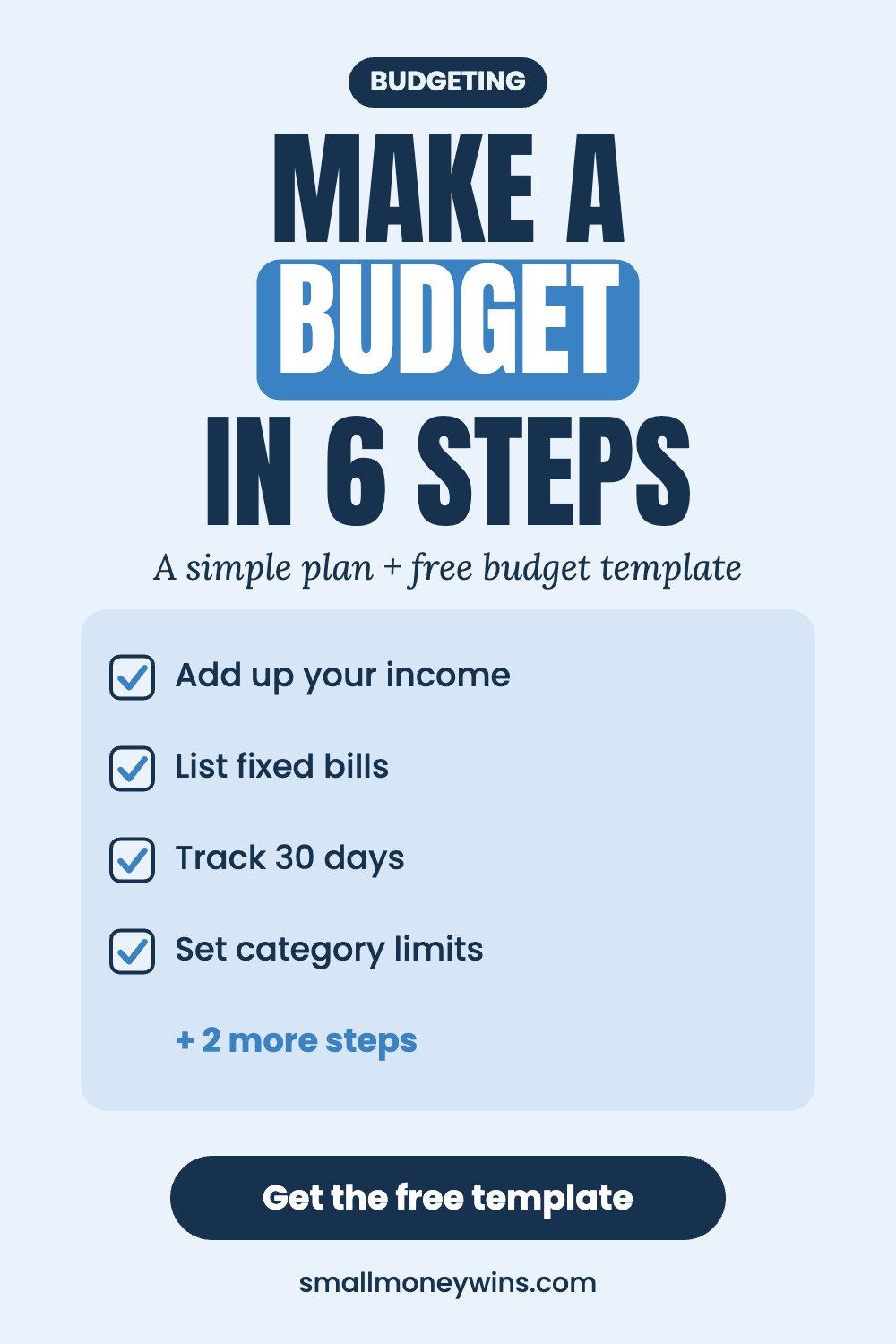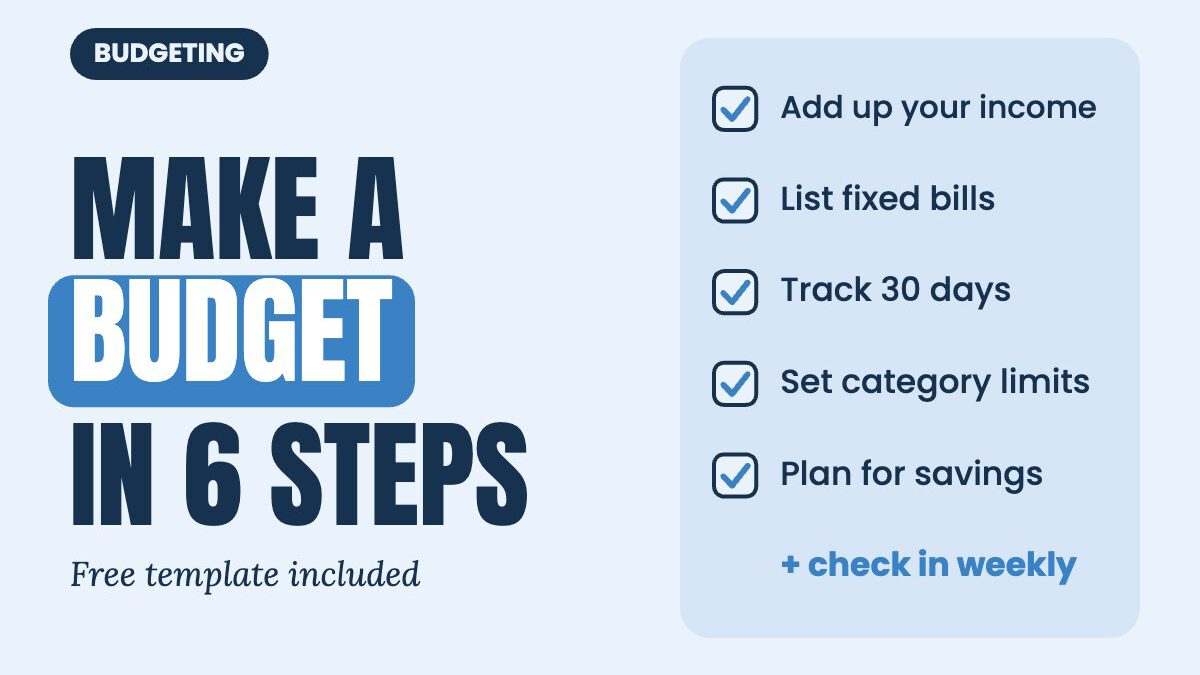
Quick answer: To make a budget: (1) add up your monthly take-home pay, (2) list your fixed bills, (3) track what you actually spend for a month, (4) set a limit for each spending category, (5) plan your savings and debt payments, and (6) check in every week. Use the free monthly budget template below to fill it all in on one page.
A budget isn’t a punishment. It’s just a plan for where your money goes, made before the month starts instead of wondering where it went after. You don’t need an app, a finance degree or perfect math. You need about an hour and the template below.
Step 1: Add up your monthly income
Write down your take-home pay, meaning the amount that actually lands in your account after taxes and deductions. Include every paycheck, side income, child support or benefits you receive regularly.
Irregular income? Budget using your lowest typical month. Anything you earn above that becomes a bonus for savings or debt.
Step 2: List your fixed bills
These are the costs that stay about the same each month: rent or mortgage, utilities, phone, internet, insurance, car payment, minimum debt payments, childcare and subscriptions. Pull up your bank statement so you don’t miss any.
Don’t forget non-monthly bills like car registration, annual subscriptions or holiday gifts. Divide each yearly cost by 12 and add it as a monthly “sinking fund” line.
Step 3: Track your spending for 30 days
Look at last month’s bank and card statements and sort every purchase into categories: groceries, gas, eating out, household items, personal care, entertainment and so on. This step is often eye-opening. Most people find at least one category where they’re spending more than they realized.
Step 4: Set a limit for each category
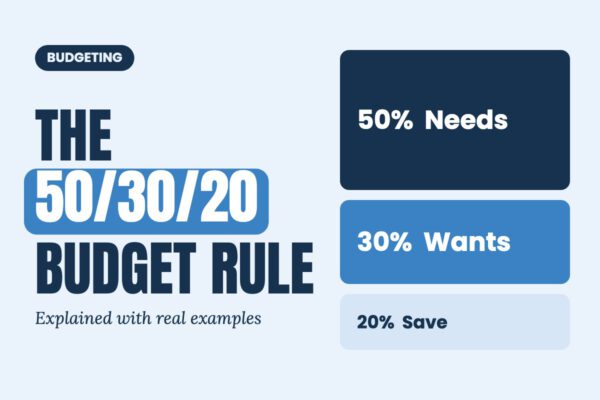
Now decide how much you want to spend in each category next month. Start with your real numbers from step 3 and trim where it feels realistic. If you’re new to budgeting, the 50/30/20 rule is a helpful starting point:
- 50% needs: housing, utilities, groceries, transportation, insurance
- 30% wants: eating out, entertainment, shopping, hobbies
- 20% savings and debt: emergency fund, extra debt payments, retirement
These percentages are a guide, not a rule. In high-cost areas, needs often take more than 50%, and that’s okay.
Step 5: Plan for savings and debt
Give savings its own line in the budget, just like a bill. Even a small amount counts. A common order is:
- A starter emergency fund (many people aim for around $1,000)
- Extra payments on high-interest debt
- A fuller emergency fund and longer-term goals
When your budget is done, income minus everything you planned should equal zero. That doesn’t mean you spend it all. It means every dollar has a job, including the dollars assigned to savings.
Step 6: Check in every week
Set a 10-minute “money date” once a week. Compare what you’ve spent so far with your plan and adjust. Overspent on groceries? Move money from eating out. Budgets that get checked weekly are much more likely to work than ones written once and forgotten.
Free monthly budget template
Print this one-page template to fill in your income, bills, everyday spending, savings and a quick summary each month.
Monthly Budget Template (free printable)
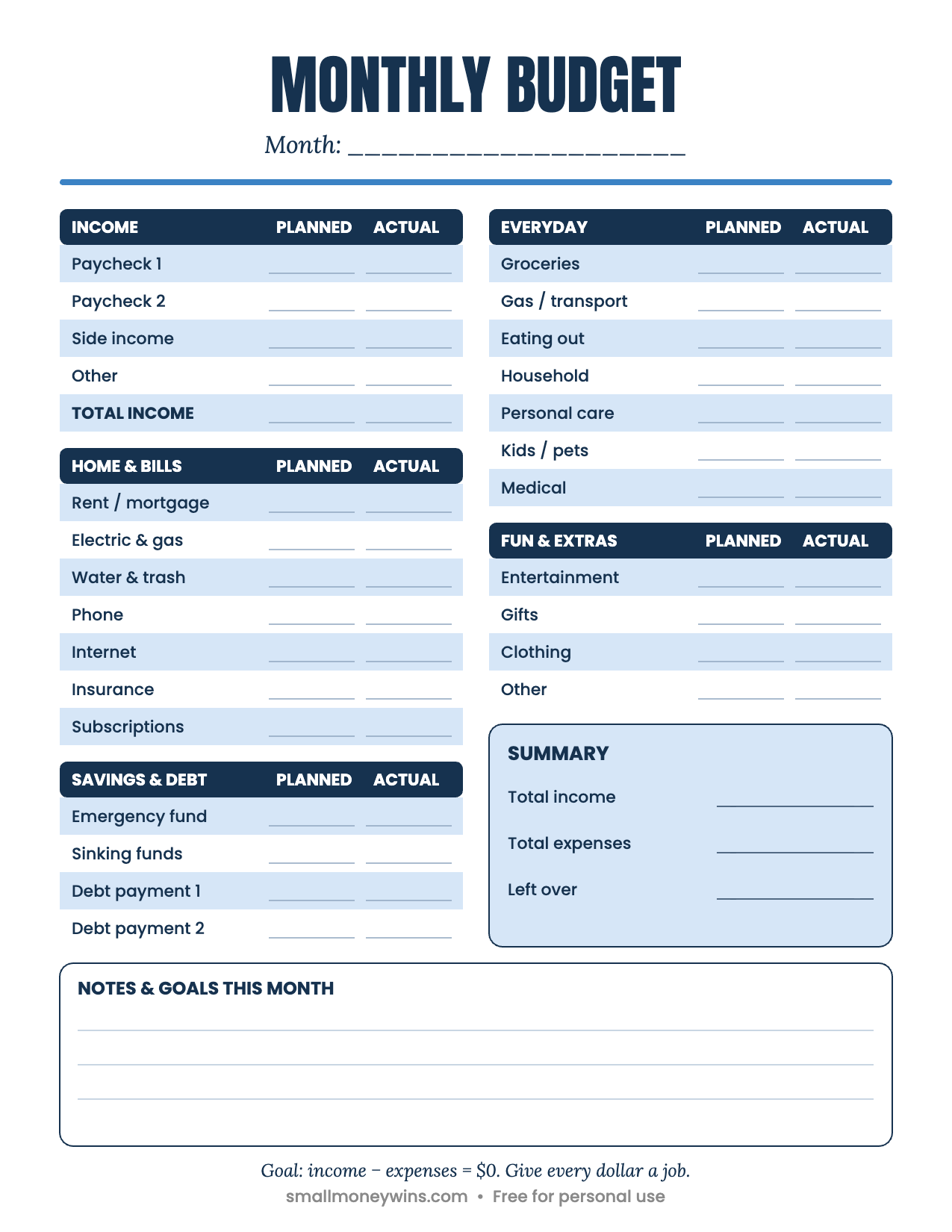
Free for personal use, no sign-up needed. Prints on US Letter paper.
Common budgeting mistakes
- Being too strict. A budget with zero fun money is hard to stick to. Leave a small amount for things you enjoy.
- Forgetting irregular expenses. Birthdays, car repairs and annual fees break budgets when they’re not planned.
- Quitting after one bad month. Your first few budgets will be off. That’s normal. Each month gets more accurate.
- Using gross income. Always budget with take-home pay.
FAQ
What’s the easiest budget method for beginners?
Many beginners start with the 50/30/20 rule because it only has three buckets. Once that feels comfortable, a more detailed category budget like the template above gives you more control.
Should I use an app or paper?
Use whichever you’ll actually open. Paper is great for seeing everything at once; apps are handy for tracking on the go. Some people use both.
How long does it take for a budget to work?
Usually about three months. The first month shows where your money really goes, and the next two help you fine-tune the numbers.
This article is for general educational purposes and is not personalized financial advice.
Save this for later
Pin this guide so you can find it again when you need it.